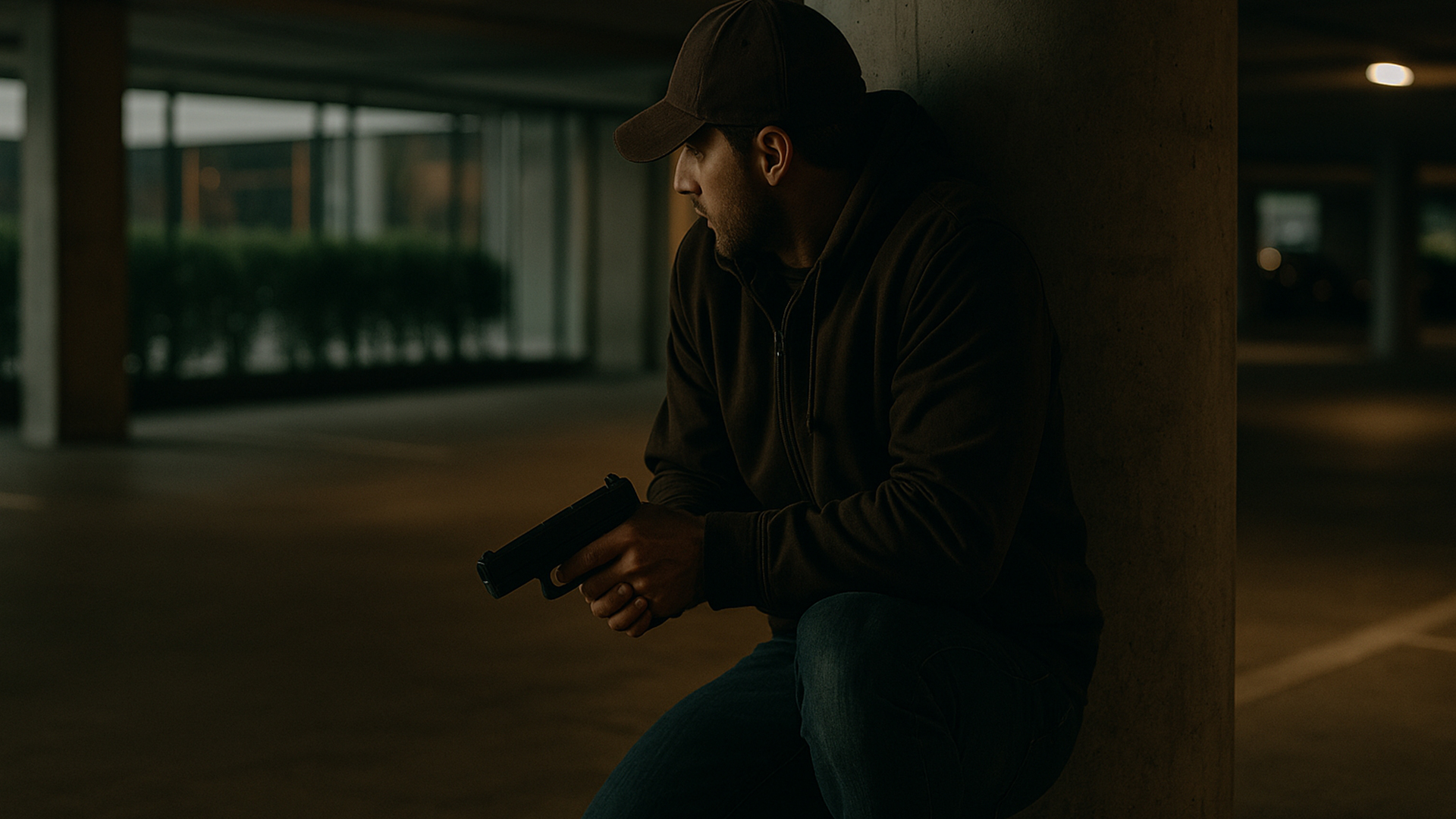
Using Cover vs. Concealment: Make Your Surroundings Work for You
What Is Cover — and Why Is It Your First Choice?
Cover isn’t just anything that hides you—it’s an object that actually stops bullets, offering real protection during a defensive encounter. Solid barriers like concrete walls, thick tree trunks, or engine blocks can block or slow incoming rounds, giving you a real layer of safety. Ideally, your first instinct during any threat is to move behind cover—this is the ground truth between fiction and survival.
What Is Concealment—and When Is It Useful?
Concealment only hides you from view, but doesn’t stop bullets. Think furniture, bushes, or shadows—these can cloak your presence long enough to plan. While far from perfect, concealment serves a tactical use: it buys time and keeps you out of sight until stronger protection is within reach. Privacy, not safety, is what concealment achieves.
Combining Cover and Concealment Makes You Safer
A strong strategy blends both elements:
Use concealment to remain unnoticed while you move.
Transition to cover as soon as it’s safe and accessible.
Leave at least an arm’s length of space between you and cover to maintain visibility, mobility, and safety from ricochets or debris
Your situational awareness becomes the weapon—not your pistol.
Everyday Objects as Tactical Tools
Your environment holds hidden opportunities:
A parked car or engine block can stop rounds.
A thick counter or bookcase may shield you.
Even landscape elements—like heavy dirt berms or brick planters—can provide protection.
Learn to recognize these informal cover spots in places you frequent daily—grocery stores, parks, malls, or restaurants.
Practice Makes Preparation
Train your brain to spot cover and concealment automatically:
Ask yourself regularly: “If danger appears right now, what’s my cover?”
Rehearse transitions—from concealment to cover—during dry-fire or scenario drills.
Visualize everyday environments and plan routes that allow safe escape or engagement.
These mental checks, practiced over time, become instinctive when it really counts.
Final Takeaway: Think Smarter—Stay Aware
559CCW Online CCW Permit Course
- 100% Online & Self-Paced – Train anytime, anywhere
- Instant Access – Start learning right after you enroll
- SB2-Compliant Training – Meets California CCW requirements for Fresno, Madera, Merced & Kings Counties