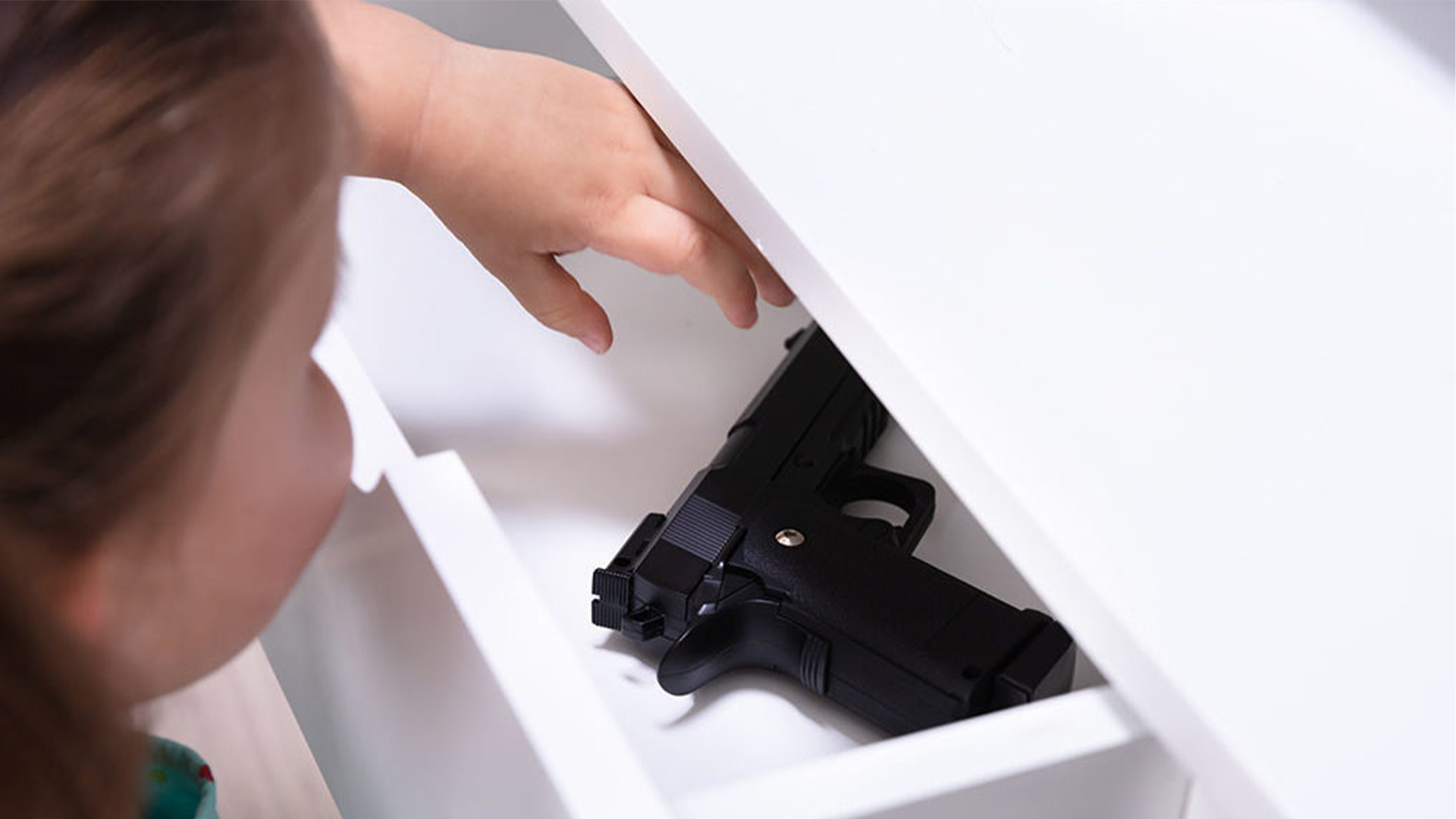
Teaching Kids About Firearms at Home: A 4-Step Parent Script
Talking to your kids about firearms doesn’t have to be awkward or scary. With a simple plan, you can teach safety in plain English and make the rules stick. Use this four-step script at home, adapt it by age, and repeat it often—just like seatbelts and looking both ways.
Why this matters (and how to keep it calm)
Kids are curious. They learn by touching and testing boundaries. Clear, steady guidance from you prevents bad habits and helps them make the right choice if they ever see a firearm—at home, at a friend’s house, or out in the world. Keep your tone calm and matter-of-fact. Safety is normal in your home, not a “big scary talk.”
Step 1: Explain — “A firearm is a tool, not a toy.”
Parent script (short):
“A firearm is a tool for adults. It can cause serious harm if used the wrong way. That’s why we follow strict rules every time we’re around one.”
What kids need to understand
Firearms aren’t for play or showing off to friends.
Only trained, responsible adults handle them.
Safety rules apply every time, not just at the range.
How to teach it
Use everyday comparisons: “Like the stove—it’s useful, but not for kids to use alone.”
Keep it simple and repeatable. Kids remember short phrases.
Step 2: Teach — The “Stop, Don’t Touch, Leave, Tell” rule
Parent script (short):
“If you ever see a gun—even if you think it’s fake—do four things: Stop. Don’t touch. Leave the area. Tell a grown-up right away.”
Practice it
Turn it into a quick role-play. Point to a random object and say, “Pretend that’s a gun. What do you do?”
Have your child say the four steps out loud and act them out: freeze, hands off, step away, find an adult.
Why this works
It removes guessing. Your child won’t try to “figure it out” in the moment.
It covers real-world situations (friend’s house, park, relative’s garage).
Step 3: Show — Basic safety rules (without handling)
Parent script (short):
“Any firearm should be treated as if it’s loaded. We never point it at anything we’re not willing to damage. We keep our finger away from the trigger. And we know what’s around and behind a target.”
How to teach it at kid level
Use a flashlight or TV remote as a stand-in to show “muzzle direction.” Never point at people or pets.
Have your child practice good “muzzle awareness” with the stand-in: keep it pointed in a safe direction at the floor or a wall.
Reinforce “finger off the trigger” by placing their finger along the side of the object instead of the button.
Note: Kids should not handle a real firearm unless you’ve chosen to do a controlled, age-appropriate safety demo under your direct supervision. If you do, keep it unloaded, double-check the chamber, and make the “finger off trigger / safe direction” rules the focus.
Step 4: Reinforce — Safe storage is part of the lesson
Parent script (short):
“At home, firearms are stored locked. That means a safe, lockbox, or other secure device that kids can’t open. Ammunition is stored securely too.”
What this looks like
A dedicated safe or lockbox that fully covers the trigger guard and cannot be opened by a child.
Keep keys or combinations under adult control.
Regularly remind kids: “If you find anything that looks like a gun, remember the four steps.”
Age-by-age tips
Ages 4–7: Keep it simple
Repeat the four-step rule.
Use short sessions (2–3 minutes).
Praise correct answers: “You remembered—nice job.”
Ages 8–12: Add context
Talk about why rules exist and how poor choices hurt people.
Practice scenarios: “What if a friend wants to show you their dad’s gun?”
Introduce safe storage devices by name (safe, lockbox).
Teens: Build judgment
Discuss peer pressure and social media (“don’t post” and “don’t pose”).
Talk through real-world decisions: leaving a party, calling a parent for a ride, reporting unsafe behavior.
A 5-minute “family safety huddle” (use this monthly)
Repeat the four steps: Stop. Don’t Touch. Leave. Tell.
Point to a safe direction in your house (e.g., a brick wall).
Review the “what if”: Finding a firearm at a friend’s house.
Check your storage: Confirm safes/lockboxes are locked.
End with one question: “What would you do if…?” Let your child answer.
Set a reminder on your phone for the same day each month. Short and consistent beats long and rare.
Common parent questions
Q: Should I tell my kids we have a firearm at home?
A: If you own firearms, be honest in an age-appropriate way and emphasize your storage rules. Mystery fuels curiosity; clarity supports safety.
Q: What about toy guns or airsoft?
A: Keep toy play clearly separate from real-life rules. If you allow toy blasters, teach muzzle awareness and “no pointing at faces.” Airsoft/BB guns should be treated with respect, protective gear, and adult supervision—never used to scare or “prank.”
Q: How often should we review this?
A: Monthly is a good rhythm. Also review before sleepovers, trips, or when visiting new homes.
Q: What if my child sees a firearm at a friend’s house?
A: They should follow the four-step rule and call you. You can calmly contact the other parent or pick your child up—no drama, just safety first.
Downloadable mini-script (copy/paste or print for the fridge)
Kids:
If you see a gun: Stop. Don’t Touch. Leave. Tell.
Guns are tools, not toys.
Never point anything that looks like a gun at a person or pet.
Parents:
Keep firearms locked; keep keys/combinations secure.
Do a quick monthly safety huddle.
Talk before playdates about house rules and storage.
Final thought: Start the conversation, keep it simple, repeat often
The goal isn’t to scare kids; it’s to give them clear steps they can follow without thinking twice. Short, steady talks and strong storage habits make your home safer—and help your child make smart choices anywhere.
And just like kids need simple rules, adults need the right training too. If you’re ready to carry responsibly in California, our Online CCW Permit Course gives you everything you need to meet the legal requirements and build the confidence to protect your family.
Enroll today in the 559CCW Online CCW Permit Course!
Train with 559CCW
-
Online CCW Permit Course
Approved in Fresno, Madera, Merced & Kings Counties. -
100% Online & SB2-Compliant
Finish your 16-hour classroom requirement from home — works on any device. -
Learn at Your Own Pace
Our online platform saves progress automatically so you can train on your schedule.